
La sfida e la vicenda umana di Danilo Antonelli e della sua famiglia, traguarda le 10 vendemmie per il Sagrantino dedicato al bisnonno. Il vino si fa testimonianza: non solo un prodotto della terra, ma memoria e voce identitaria del territorio di Montefalco.
NUOVI INIZI
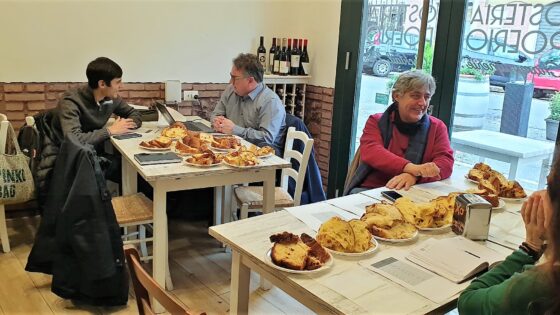
Ci sono momenti in cui i descrittori organolettici cedono il passo al racconto umano. Succede quando una degustazione di dieci annate smette di essere cronaca tecnica per farsi storia familiare. Danilo Antonelli ha accolto i presenti con parole che pesano come terra bagnata e brillano come luce tra i filari:
“Grazie di cuore per essere qui oggi, in un momento per me e per la mia famiglia particolarmente significativo. Questo evento di degustazione rappresenta non solo un traguardo raggiunto ma soprattutto un nuovo punto di partenza. È la tappa di un percorso costruito con passione, sacrificio e amore per la terra, ma anche l’inizio di una fase in cui desideriamo continuare a crescere, innovare e condividere la nostra visione del vino”.
PICCOLE GRANDI STORIE
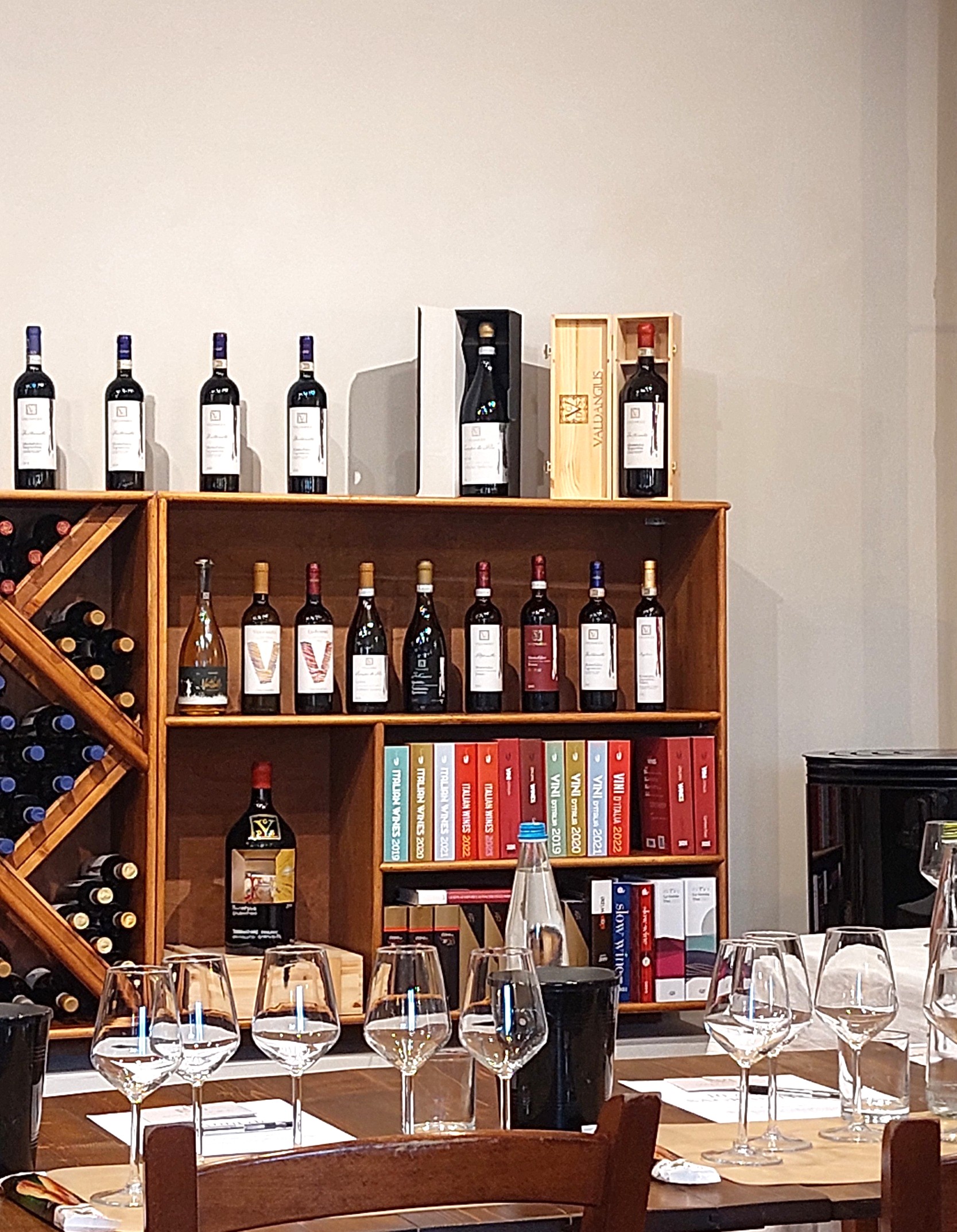
Quella di Valdangius è, a tutti gli effetti, una “piccola grande storia”. Piccola per le dimensioni iniziali — una stalla adibita a cantina, due barrique usate e una determinazione incrollabile — ma grande per l’ambizione.
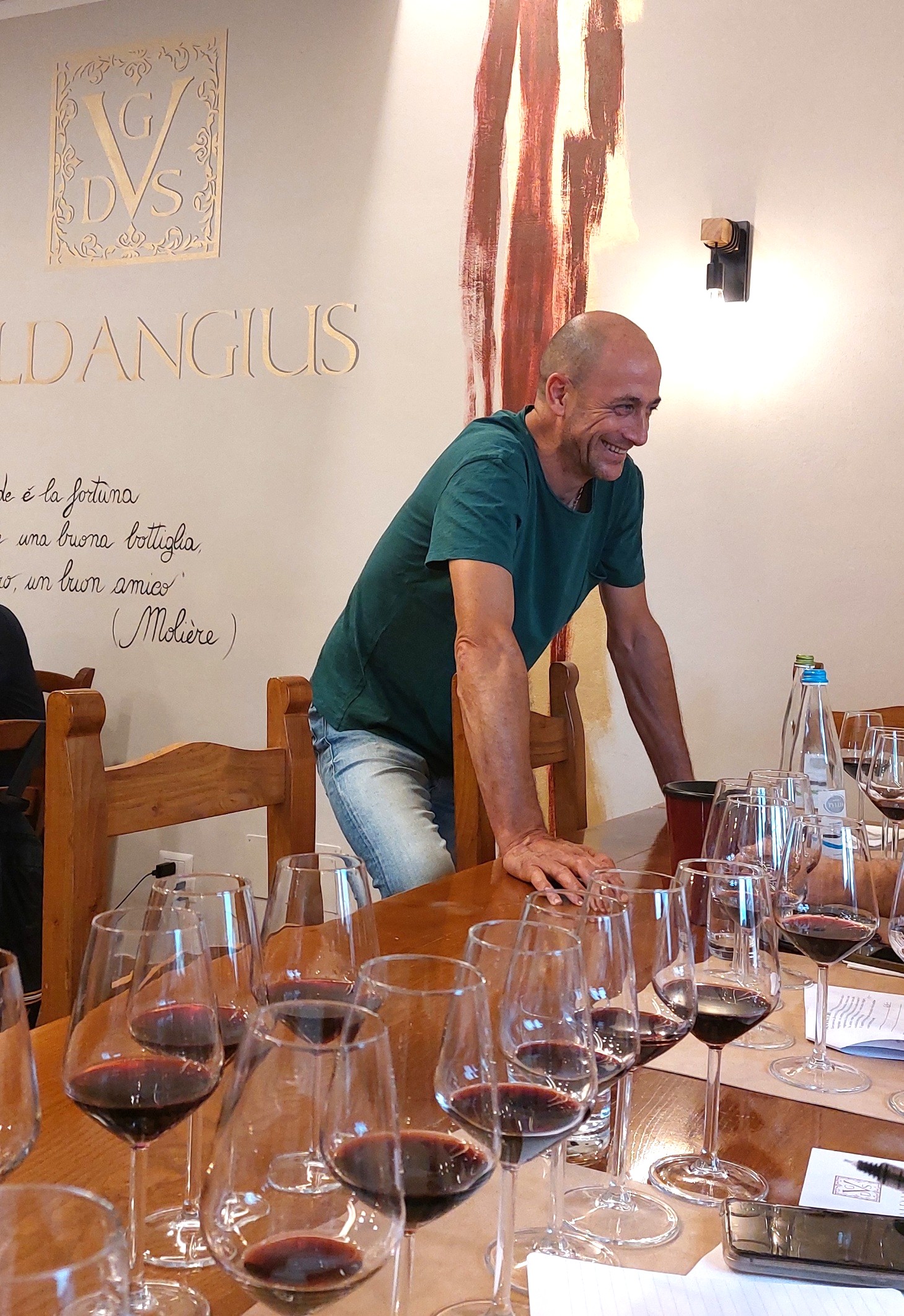
Danilo rappresenta la quarta generazione di una stirpe legata visceralmente a Montefalco. È stato lui, nel 2010, a scegliere di imbottigliare, interrompendo la tradizione della vendita di uva sfusa. Il nome stesso dell’azienda è un acronimo affettivo: Valle di Danilo, Giuseppe (il padre) e Sandra (la sorella).
La vecchia stalla diventa la cantina, con appena due barrique e una tinozza. Il fienile diventa il magazzino.
A fare il resto l’enologo Alessandro Meniconi ed il supporto incondizionato della famiglia, un fondamentale discreto e costante sostegno per poter credere nei propri sogni. Oggi la produzione arriva a 30.000 bottiglie da circa 7 ettari di vigneto, con certificazione biologica. Il vino di Valdangius cerca un’espressione pulita, elegante ma soprattutto autentica, vera, priva di sovrastrutture.
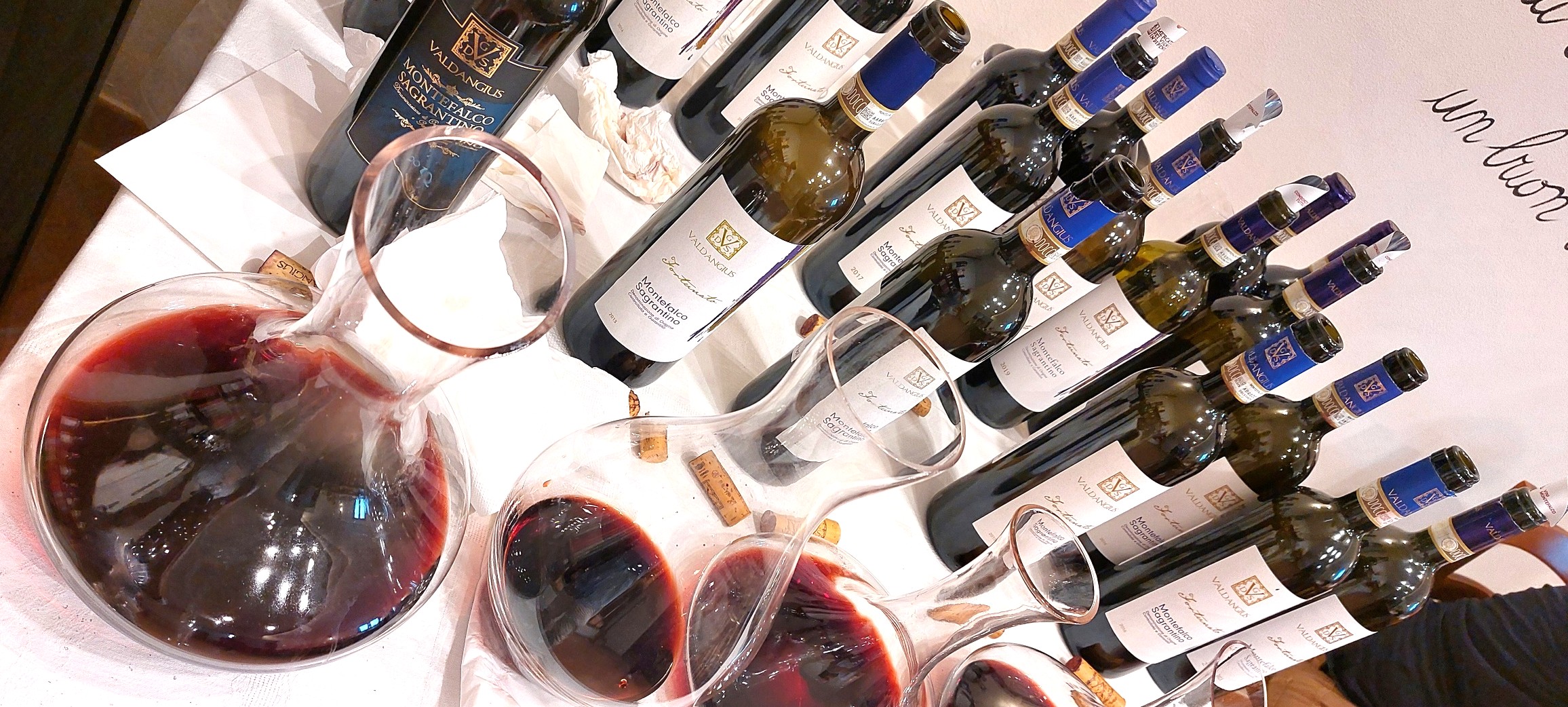
Le 10 annate che seguono sono molto di più che una degustazione: ripercorrono il cammino di Danilo e della sua famiglia tra i filari di Sagrantino, tra fatica e progetti che restituiscono nel calice il calore di una storia contemporanea che affonda le radici nel passato e guarda al futuro con occhi limpidi e appassionati.
IL SAGRANTINO FORTUNATO
Fortunato era il nonno di Danilo. Allevatore e agricoltore che, insieme alla moglie Angela, ha custodito e lavorato i terreni di famiglia acquistati originariamente dal bisnonno Giuseppe. È stato proprio Fortunato a trasmettere a Danilo i segreti del mestiere e il rispetto per la natura.
Oggi è il nome del Sagrantino di Valdangius, un modo per far camminare ancora Fortunato tra quei filari che ha tanto amato, rendendolo partecipe di quel “sogno imbottigliato” che lui, per primo, ha contribuito a seminare.
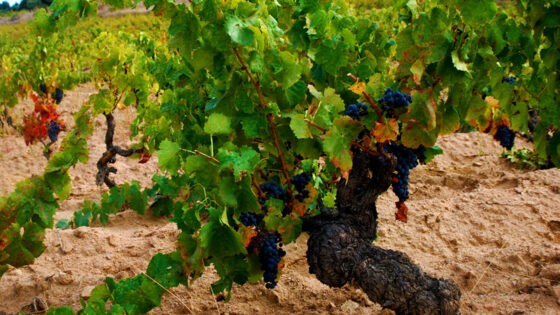
La vinificazione del Sagrantino di Valdangius inizia con una vendemmia tardiva (tra fine ottobre e inizio novembre), condotta rigorosamente a mano in piccole cassette per preservare l’integrità dei grappoli provenienti dai due ettari vitati a 380 metri di altitudine.
Il protocollo di cantina riflette una filosofia di intervento minimo e attesa massima.
Dopo una macerazione a freddo di 24-36 ore, le uve affrontano una fermentazione spontanea in acciaio a temperatura controllata. Il vero tratto distintivo è la durata del contatto con le bucce: una macerazione lenta che va dalle 4 alle 6 settimane, ma che nelle annate eccezionali può spingersi oltre i tre mesi, permettendo una maggiore estrazione polifenolica.
Il vino segue un percorso di maturazione complesso e ragionato, volto a smussare la proverbiale esuberanza del tannino senza tradire l’identità del vitigno: 24 mesi in botti grandi di rovere francese e, a partire dalla 2020, 12 mesi in anfora, una scelta che favorisce l’ossigenazione naturale e la purezza degli aromi. Seguono infine 18 mesi conclusivi di riposo in bottiglia.
10 ANNATE DI SAGRANTINO FORTUNATO
Ogni Sagrantino, pur in una sostanziale coerenza stilistica ha manifestato tratti peculiari, frutto dell’annata, del tempo e delle scelte di cantina.
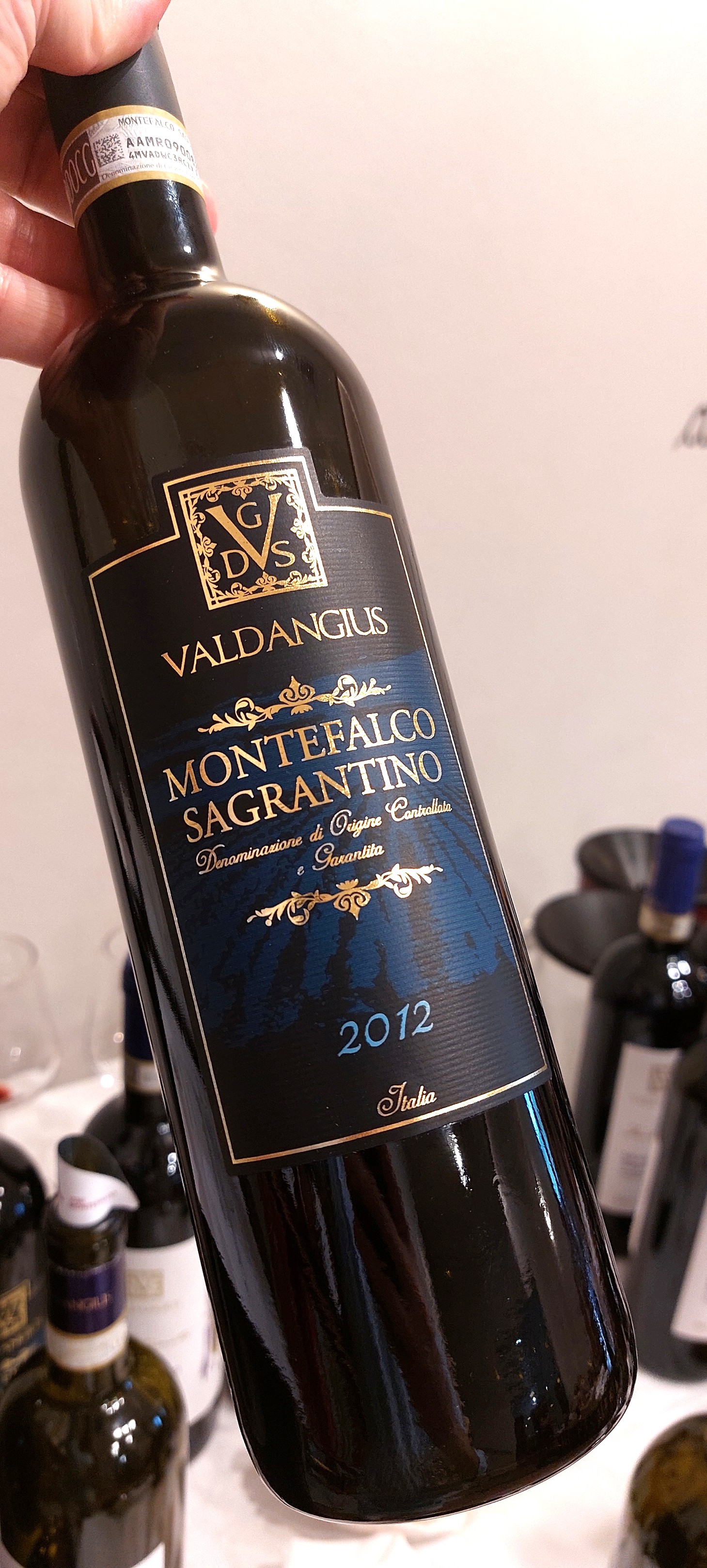
2012 – L’Evoluzione. Granato con ancora ricordi rubino. Al naso sprigiona note funginee, mallo di noce, fresia, panpepato. Complessità ed evoluzione. Sorso levigato e ammaliante, con tannini ben integrati ma presenti ed una interessante spalla acido-sapida che caratterizza la parabola gustativa.
2013 – Il Paradigma. Granato cupo e compatto, lucido. Naso mentolato, poi note di erbe aromatiche, bouquet garni, chiodi di garofano, pepe, un’idea vegetale di habanero. Sorso pieno e serrato, espressione matura e tipica di un sagrantino potente e paradigmatico.
2014 – La Sorpresa. Granato con unghia rubino. Ricchi intarsi speziati ed elegante intreccio di note scure, vermouth, carrube, tabacco kentucky. Sorso suadente, morbido in ingresso, poi ampio ed avvolgente, con tannini fitti e sottilissimi. Notevole persistenza. Grande risultato, nonostante una annata non facile.
2015 – L’Introverso. Granato concentrato e luminoso. Toni sottaciuti, di non facile lettura, che infilano note di carrube, liquirizia, legna arsa, china e un’idea di oliva nera. Sorso solare in ingresso con tannini sottili e buon dinamismo conferito da una acidità ben calibrata.
2016 – La Sontuosità. Annata eccellente che illustra un’altra chiave di lettura del Sagrantino, rispetto la precedente 2015. La rotondità del frutto si esprime a pieno, con note di sciroppo di amarena, prugna matura, cacao. Sorso pieno e levigato, sontuoso. Coerente negli aromi, offre tannini affusolati e chiude con nitore ed eleganza.
2017 – La Muscolarità. Granato con unghia mattone. Rimandi di Vermouth, macchia mediterranea, note balsamiche, caffè. Sorso intenso e muscolare, scuro e severo, con una buona integrazione tra le componenti. Sconta l’annata calda mostrando un profilo più maturo delle due precedenti annate.
2018 – La Solarità. Frutti di bosco, mirtillo spezie e liquirizia dolce, si offrono in un profilo olfattivo fruttato e solare. Altrettanto luminoso all’assaggio, piacevole e succoso. Guadagna agilità rispetto i precedenti, pur mantenendo una trama tannica ben integrata.
2019 – La Matericità. Granato, con orlo rubino. Simile alla 2019 ma con una palette decisamente più scura: si aggiungono note di china, carrube, inchiostro, tabacco. Le sensazioni fruttate virano sulla mora di rovo, si affiancano sensazioni minerali quasi fumè. Sorso strutturato, levigato e materico.
2020 – La Svolta Contemporanea. Granato, con orlo rubino. Simile alla 2019 ma con una palette aromatica che segna un passaggio, grazie all’introduzione dell’anfora come contenitore per l’affinamento. Emerge una florealità più intensa, insieme a note di frutti di bosco, gelsi neri, spezie dolci e cenno chinato. Sorso fresco e bilanciato, con un ottimo equilibrio e tannini ben integrati. Un punto di svolta per una impostazione più “contemporanea”.
2021 – La Gioventù. Rubino cupo e concentrato. More, frutti di bosco, rabarbaro, spunti salmastri, alga e note di ghisa. Il sorso rievoca l’agilità e leggerezza della 2020 con rimandi floreali. Tannini ben delineati, ancora giovani ma comunque molto ben gestiti.
***
SAGRANTINO DI VALDANGIUS: 10 VINTAGES OF COURAGE, LAND AND MEMORY
The challenge and the human story of Danilo Antonelli and his family, reaches the 10 harvests for the Sagrantino dedicated to his great-grandfather. Wine becomes testimony: not only a product of the earth, but memory and identity voice of the Montefalco area.
NEW BEGINNINGS
There are times when organoleptic descriptors give way to the human story. It happens when a tasting of ten vintages stops being a technical chronicle to become family history. Danilo Antonelli welcomed those present with words that weigh like wet earth and shine like light between the rows:
“Thank you from the bottom of my heart for being here today, at a particularly significant time for me and my family. This tasting event represents not only a goal achieved but above all a new starting point. It is the stage of a path built with passion, sacrifice and love for the land, but also the beginning of a phase in which we want to continue to grow, innovate and share our vision of wine”.
LITTLE BIG STORIES
Valdangius ‘ is, to all intents and purposes, a “great little story”. Small for its initial size — a stable used as a cellar, two used barriques and an unwavering determination — but big for its ambition.
Danilo represents the fourth generation of a lineage viscerally linked to Montefalco. It was he, in 2010, who chose to bottle, interrupting the tradition of selling loose grapes. The name of the company itself is an emotional acronym: Valle di Danilo, Giuseppe (the father) and Sandra (the sister).
The old stable becomes the cellar, with just two barriques and a tub. The barn becomes the warehouse.
To do the rest the oenologist Alessandro Meniconi and the unconditional support of the family, a fundamental discreet and constant support to be able to believe in one’s dreams. Today the production reaches 30,000 bottles from about 7 hectares of vineyards, with organic certification. Valdangius wine seeks a clean, elegant but above all authentic, true expression, without superstructures.
The 10 vintages that follow are much more than a tasting: they retrace the path of Danilo and his family among the rows of Sagrantino, between effort and projects that restore in the glass the warmth of a contemporary history that has its roots in the past and looks to the future with clear and passionate eyes.
LUCKY SAGRANTINO
Fortunato was Danilo’s grandfather. Breeder and farmer who, together with his wife Angela, has guarded and worked the family land originally purchased by his great-grandfather Giuseppe. It was Fortunato himself who passed on to Danilo the secrets of the trade and respect for nature.
Today it is the name of Sagrantino di Valdangius, a way to make Fortunato walk again among those rows that he loved so much, making him part of that “bottled dream” that he, first, helped to sow.
The vinification of Sagrantino di Valdangius begins with a late harvest (between the end of October and the beginning of November), carried out strictly by hand in small crates to preserve the integrity of the bunches from the two hectares of vineyards at 380 meters above sea level.
The cellar protocol reflects a philosophy of minimal intervention and maximum waiting.
After a cold maceration of 24-36 hours, the grapes undergo spontaneous fermentation in steel at a controlled temperature. The real distinguishing feature is the duration of contact with the skins: a slow maceration ranging from 4 to 6 weeks, but which in exceptional vintages can go beyond three months, allowing greater polyphenolic extraction.
The wine follows a complex and reasoned maturation path, aimed at smoothing out the proverbial exuberance of the tannin without betraying the identity of the grape variety: 24 months in large French oak barrels and, starting from 2020, 12 months in amphora, a choice that favors natural oxygenation and the purity of aromas. Finally, 18 final months of rest in the bottle follow.
10 VINTAGES OF SAGRANTINO FORTUNATO
Each Sagrantino, despite a substantial stylistic coherence, has manifested peculiar traits, the result of the vintage, time and cellar choices.
2012 – The Evolution. Garnet with still ruby memories. The nose releases fungal notes, walnut husk, freesia, gingerbread. Complexity and evolution. Smooth and bewitching sip, with well-integrated but present tannins and an interesting acid-savory shoulder that characterizes the gustatory parable.
2013 – The Paradigm. Dark and compact garnet, shiny. Mentholated nose, then notes of aromatic herbs, bouquet garni, cloves, pepper, a vegetal idea of habanero. Full and tight sip, a mature and typical expression of a powerful and paradigmatic Sagrantino.
2014 – The Surprise. Garnet with ruby nail. Rich spicy inlays and elegant interweaving of dark notes, vermouth, carob, Kentucky tobacco. The sip is persuasive, soft at the entrance, then ample and enveloping, with dense and very thin tannins. Remarkable persistence. Great result, despite a difficult year.
2015 – The Introvert. Concentrated and bright garnet. Quiet tones, not easy to read, which insert notes of carob, licorice, burnt wood, cinchona and an idea of black olive. Sunny sip at the entrance with subtle tannins and good dynamism conferred by a well-calibrated acidity.
2016 – The Sumptuousness. An excellent vintage that illustrates another key to understanding Sagrantino, compared to the previous 2015. The roundness of the fruit is fully expressed, with notes of black cherry syrup, ripe plum, cocoa. Full and smooth, sumptuous sip. Consistent in aromas, it offers tapered tannins and closes with clarity and elegance.
2017 – Muscularity. Garnet with brick nail. References to Vermouth, Mediterranean scrub, balsamic notes, coffee. Intense and muscular sip, dark and severe, with good integration between the components. It suffers from the hot year showing a more mature profile than the previous two years.
2018 – The Sunshine. Berries, blueberry, spices and sweet licorice are offered in a fruity and sunny olfactory profile. Equally bright to the taste, pleasant and juicy. It gains agility compared to the previous ones, while maintaining a well-integrated tannic texture.
2019 – Materiality. Garnet, with ruby edge. Similar to the 2019 but with a decidedly darker palette: notes of cinchona, carob, ink, tobacco are added. The fruity sensations turn to blackberry, flanked by almost smoky mineral sensations. Structured, smooth and textured sip.
2020 – The contemporary turning point. Garnet, with ruby edge. Similar to the 2019 but with an aromatic palette that marks a transition, thanks to the introduction of the amphora as a container for aging. A more intense florality emerges, along with notes of wild berries, black mulberries, sweet spices and a hint of bowing. Fresh and balanced sip, with excellent balance and well-integrated tannins. A turning point for a more “contemporary” approach.
2021 – Youth. Dark and concentrated ruby. Blackberries, berries, rhubarb, brackish hints, seaweed and notes of cast iron. The sip evokes the agility and lightness of the 2020 with floral references. Well-defined tannins, still young but still very well managed.

Aggiornamenti continui sul mondo dell'enogastronomia